The “Hubble’s Variable Nebula”, NGC 2261: an image – 11 Jan. 2026.
One of the most fascinating objects in the winter sky lies hidden among the faint stars of Monoceros, east of the imposing figure of Orion: its is NGC 2261, aka the “Hubble’s Variable Nebula”.
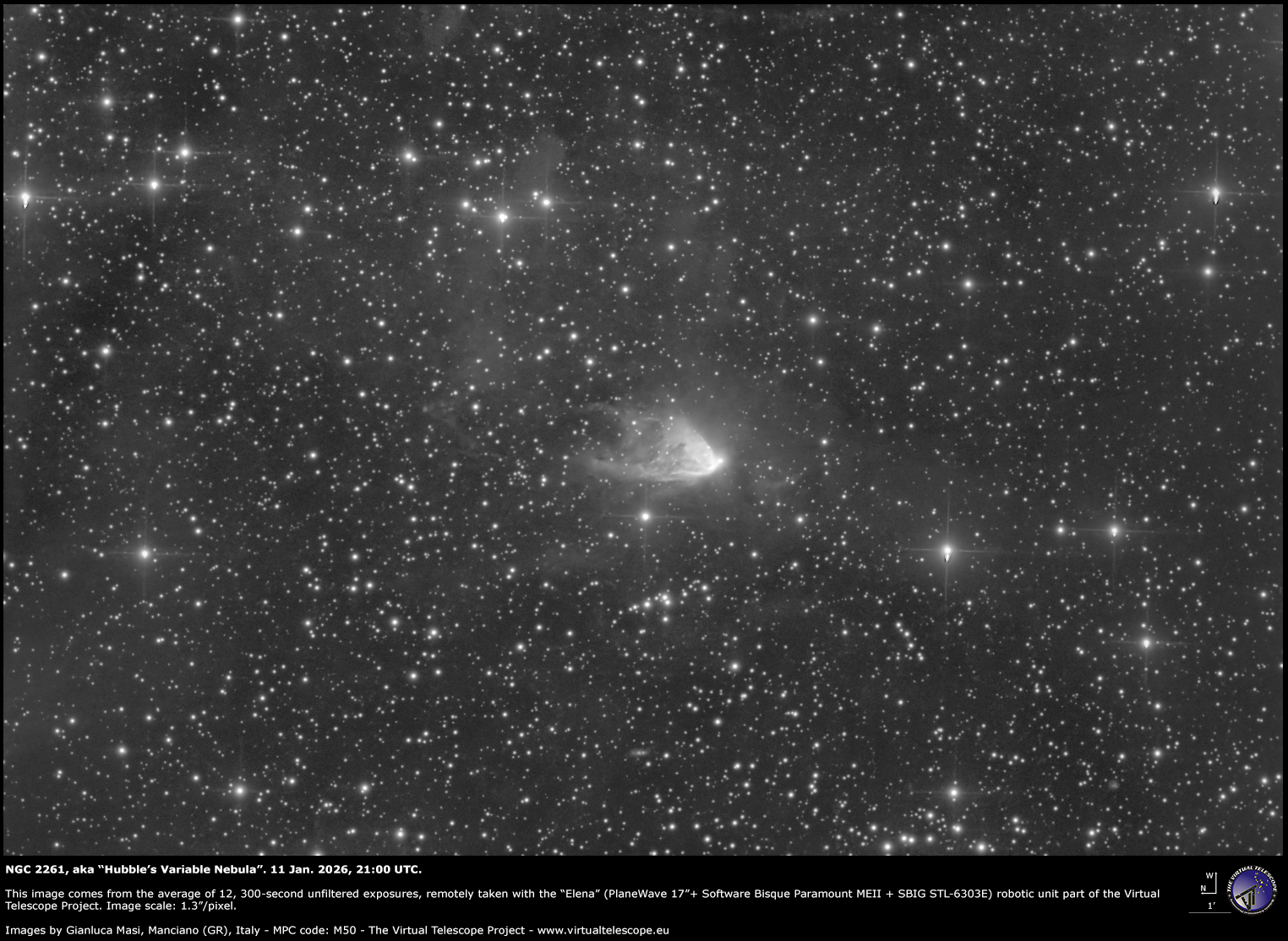
The “Hubble’s Variable Nebula”, NGC 2261: 11 Jan. 2026.
The image above comes from the average of 12, 300-second exposures, remotely taken with the “Elena” (PlaneWave 17″ + Paramount MEII + SBIG STL-6303E) robotic unit available as part of the Virtual Telescope Project and installed in Manciano, Italy.
Discovered on December 26, 1783 by the great William Herschel, NGC 2261 drew the attention of the renowned astronomer Edwin P. Hubble in early 1916, during his deep-sky surveys. Hubble emphasized its peculiar appearance, which strongly resembled that of a comet. By comparing his image with photographic plates taken about eight years earlier, he noticed that the object exhibited internal changes in structure and brightness.
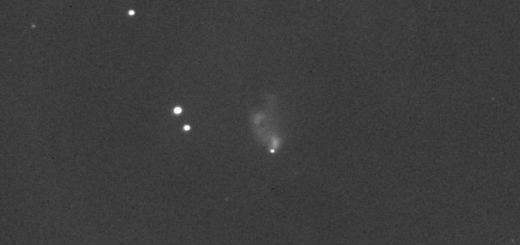
The images below come from the paper Hubble wrote in 1916, presenting the intriguing behavior of the object.
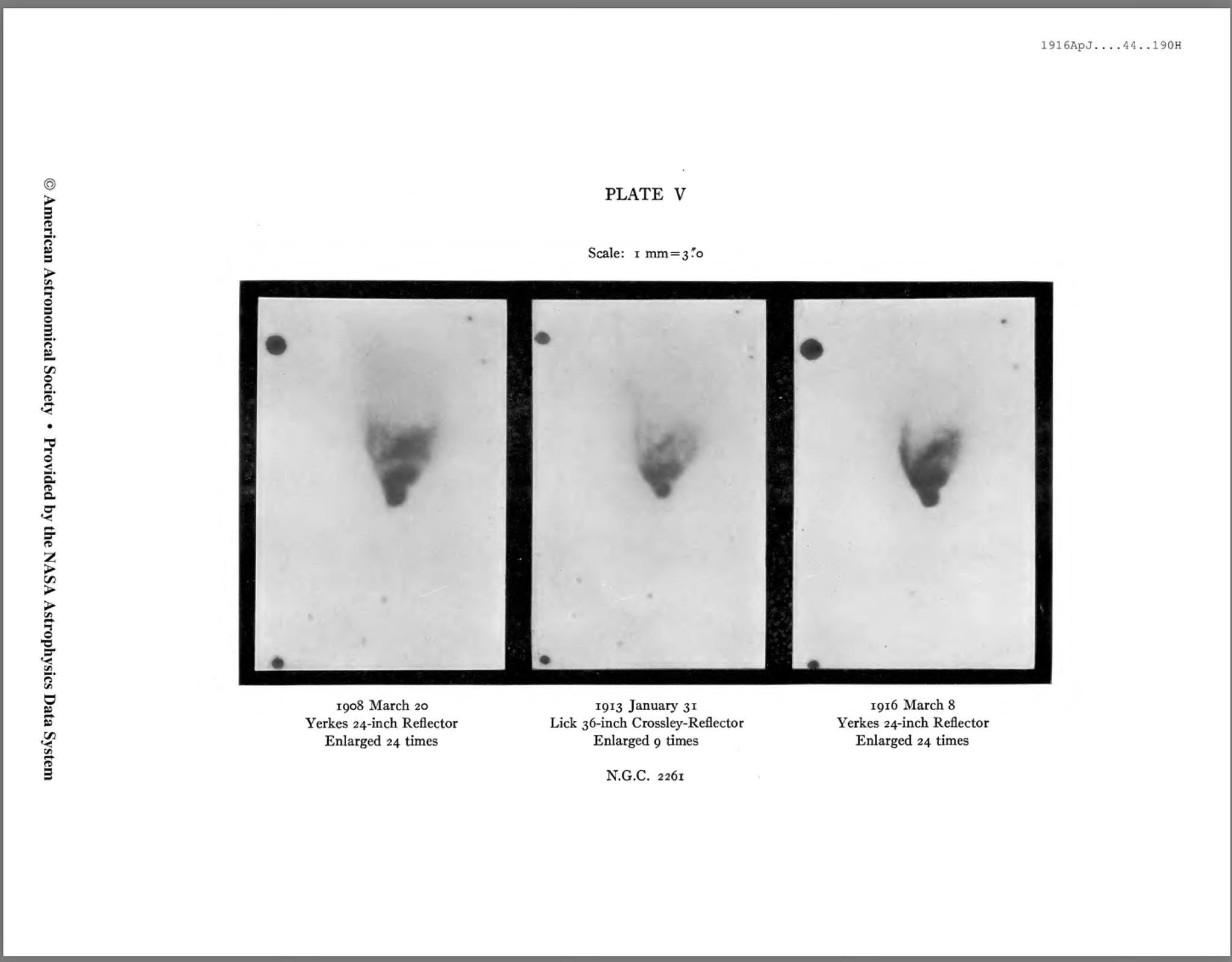
NGC 2261 variability as from the 1916 paper by Hubble.
At the time, only two other nebulae were known to be “variable”: NGC 1555 (Hind’s Nebula) in Taurus and NGC 6729 in Corona Australis.
At the southern apex of NGC 2261’s triangular-shaped structure lies the variable star R Monocerotis, embedded within the surrounding nebulous material. Today we know that this star is responsible for the nebula’s unusual behavior: dense moving clouds of dust in its immediate vicinity cast shadows across the nebula, producing the remarkable variations observed.
Located at a distance of about 2,500 light-years, NGC 2261 represents an ideal target for a medium-term observing or imaging project: by photographing it regularly over several months, one can effectively document the very changes that have made this object both famous and historically significant in the development of astronomical science.
Support The Virtual Telescope Project!
Support us! Please, donate and celebrate the ARTEMIS II mission with an EXCLUSIVE and STUNNING digital hi-res image of the largest Supermoon of 2025 to download and frame on your wall and many more pictures, specifically made for supporters like you!